Free postage on all orders over £95.
Coopers Beer Kits now in stock
View our latest Special Offers
5% Discount on orders over £150.00
£145.00 £130.00
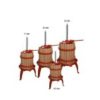
6 litre spindle press, holding up to 5 kg of crushed fruit, it can produce about 3 litres of juice.
It can be used along side with any of our crushers
Out of stock
for beer bottles 26mm caps
Ascorbic Acid is an anti-oxidant used as a partial substitute for sulfur dioxide, or used to prevent oxidation, which creates a dull and unpleasant flavor, and to prevent discoloring in the final product. Recommended for wines that discolor easily.
Ascorbic Acid, like Copper Sulfate, is often used to treat hydrogen sulfide (H2S) or ‘mercaptans’, which presents as a rotten egg scent in your wine. Try treating first with Copper Sulfate but if the problem persists, then treatment with Ascorbic Acid will be necessary. If you have advanced H2S ‘disulfide’, the scent could be described as burnt rubber or garlic-like and the wine will not improve with the treatment of Copper Sulfate alone. The use of 0.25gm Ascorbic Acid per gallon will often help by converting the disulfides back to mercaptans. The process may take up to three weeks, after which the wine should be treated with Copper Sulfate.
Use 0.25 grams of ascorbic acid per gallon.
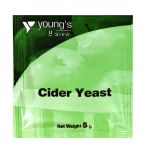
makes 40 pints of traditional cider or 31 pints of strong cider
his strain is known for it’s exceptional reliability and it’s ability to consistently deliver fresh, clean, crisp and robust ciders. It is a very low foaming strain that will ferment between 10 – 35°C, adhering to the ideal fermentation for cider; measured and steady. The flavour characteristics confered by this strain are neutral and clean meaning that the natural flavour of the fruit will be the prominant taste on the palate, guaranteeing a satisfying, well balanced cider. Overall, a classic cider yeast that will ferment to dryness with a delicious, powerful and refreshing fruity finish, perfect for making your own traditional European cider.
Technical Information
Gluten Free
Alcohol tolerance: 15% v/v
SO tolerance: High
Foaming: Low
Low production of urea
Low production of fusel oils
Viability: >1.0x 10 CFU/g