Free postage on all orders over £95.
Coopers Beer Kits now in stock
View our latest Special Offers
5% Discount on orders over £150.00
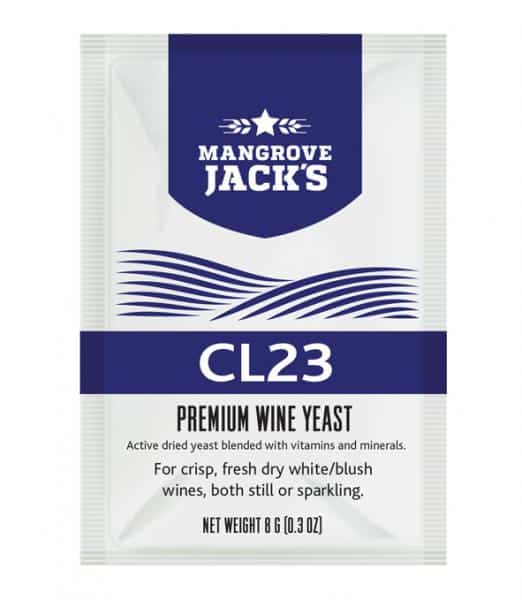
Mangrove Jacks Yeast CL231 × £1.45
Mangrove Jacks Yeast CL231 × £1.45 £1.99
Alcotec VodkaStar turbo yeast contains a high purity yeast strain, chosen for its ability to create very clean and neutral alcohol from a sugar/water wash. It will ferment to 14% in 5-6 days. Note that for making vodka from grains, you also need enzymes to break down starch components into fermentable sugars. If you use grains, rice or similar in the recipe – use Alcotec Vodka Turbo with GA instead and you may need to pre-treat the wash with Alpha Amylase enzyme. Temperature range is 20-25°C for maximum purity but it works up to 35 °C
13 in stock
ide range of applications and can also be used when making fruit wines.
Technical Info
Alcohol tolerance: 18% v/v
SO2 tolerance: High
Foaming: Medium
Low production of urea
Low production of fusel oils
Viability: >1.2x 10 CFU/g
Rehydration
During yeast manufacture, special processs are employed to promote very high leveles of the natural compound – Trehalose within the yeast.
Trehalose is a natural sugar produced within the yeast cells to protect itself during prolonged storage and stress conditions.
The very high levels of trehalose acheieved also remove the need for re-hydration before adding to must or wort – there is now no advantage in doing this even for high alcohol wines.
Diammonium Phosphate, powder for use in winemaking. This is the basic nitrogen source in nearly all wine yeast nutrients. It can be used by itself or to augment some of the more expensive complete nutrients. At certain stages of fermentation it will help inhibit formation of reduced sulfur compounds.
Saccharomyces Cerevisiae – For sweet white/blush and dessert wines. Produces high levels of desirable congeners during fermentation including aromatic thiols, imparting rich fruity aromatics, full body and ‘tropical’ flavor characteristics. CY17 is also noted for high glycerol formation, further enhancing sweetness.
This is a slow fermenter compared to all other strains in the Mangrove Jack’s range, typically taking up to 21 days to ferment table wines and up to 35 days for dessert wines. CY17 prefers a constant temperature in the 22 – 26ºC (72 -78ºF) range. Dropping the temperature below 15ºC (59ºF) two thirds of the way through fermentation will arrest fermentation making CY17 suitable for producing naturally sweet wines (both potassium sorbate and metabisulphite must be used to prevent re-fermentation).
CY17 is also excellent for sweet sparkling wines, but CL23 must be employed for the bottle fermentation stage.
Avoid free SO2 levels above 50 ppm and ensure pH above 3.2, CY17 is a delicate strain that must be treated with some respect. Pay particular attention to sterile winemaking conditions and a warm start to fermentation otherwise risk of bacterial contamination is increased. CY17 will happily ferment up to 15% abv. ethanol if such conditions are employed
Youngs Ale Yeast is a customary example of a traditional top fermenting English Ale yeast and is used throughout the country in commercial breweries as well as by home brewers. The pure single strain culture has several outstanding characteristics such as it’s high temperature tolerance, high alcohol tolerance, relatively low risk of bacterial contamination and outstanding sedimentation characteristics, making it a consistently popular option, delivering reliable top quality Ale’s. You can expect a full bodied, fruity Ale with a hoppy, estery nose and palate. When using this yeast you can look forward to a high final gravity that delivers additional body, weight and a fuller flavour to competitor yeasts. Young’s Ale yeast can be sensitive to variations in fermentation temperature but where constant temperature is used it is a forceful strain with very strong fermentation and moderate attenuation properties.
Technical Information
Gluten Free
Alcohol Tolerance: 9.5% v/v
Viable cell count > 5.0 x 10 CFU/gram
Wild yeast: 1 per millin
Total bacteria:
Rehydration
During yeast manufacture, special processs are employed to promote very high leveles of the natural compound – Trehalose within the yeast.
Trehalose is a natural sugar produced within the yeast cells to protect itself during prolonged storage and stress conditions.
The very high levels of trehalose acheieved also remove the need for re-hydration before adding to must or wort – there is now no advantage in doing this even for high alcohol wines.