Free postage on all orders over £95.
Coopers Beer Kits now in stock
View our latest Special Offers
5% Discount on orders over £150.00
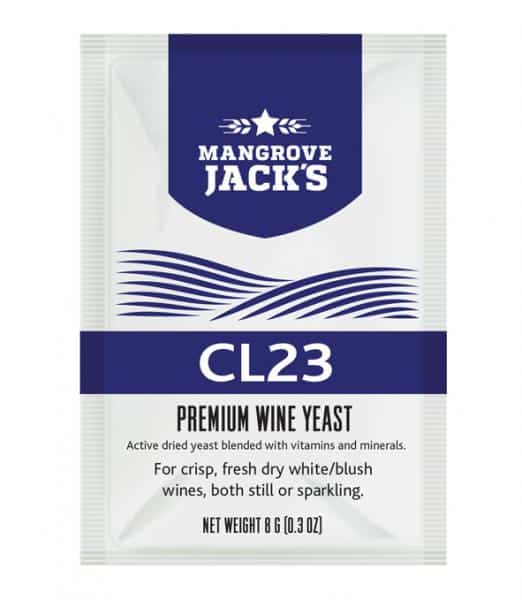
Mangrove Jacks Yeast CL231 × £1.45
Mangrove Jacks Yeast CL231 × £1.45 £2.99
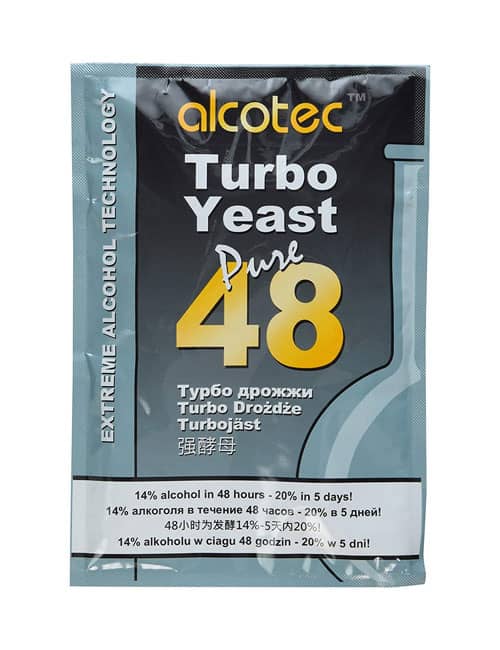
Alcotec 48 Turbo Yeast is probably the best selling turbo in the world. It is based around a “pure” yeast strain which is a temperature tolerant, high alcohol distillers strain. With the unique precisely composed nutrition, containing the nitrogen source, pH regulator, trace minerals, vitamins and an antifoaming agent, it is the perfect yeast compound for creating a high alcohol wash. It has a “dual” use, you can either use it for 20% (21% in special circumstances) alcohol in 5-6 days, or 14% in 48 hours (hence the name). The alcohol level is simply determined by the amount of sugar you add at start. Alcotec 48 includes mineral absorbents for ultra purity. Comes in 135g
Out of stock
Alcotec 24-Hour Turbo Yeast is a mixture of dry distiller’s yeast and yeast nutrients designed for super-fast fermentations that produce high alcohol content. The recipes included with the 205 g package produce 25 liters with 13-14% ABV in just 24 hours. The actual fermentation looks like nothing you have seen before in home brew, it is more of an explosion. For making alcohol, there is nothing faster.
Saccharomyces Cerevisiae – Ideally suited for rich, full bodied red wines with exceptional flavour complexity.
Noted for exceptional depth and flavour complexity, R56 exhibits complex aromatics during fermentation conferring an old world quality which one might only expect from natural flora multiple strain fermentations.
Unusually for complex aromatic strains, R56 still respects the varietal character of the fruit and confers good structure and balance. R56 is also a high glycerol producing strain.
R56 is a medium rate fermenter with optimal temperature between 22 to 30ºC (72 -86ºF) which will ferment to 13.5% abv. ethanol.
Youngs Ale Yeast is a customary example of a traditional top fermenting English Ale yeast and is used throughout the country in commercial breweries as well as by home brewers. The pure single strain culture has several outstanding characteristics such as it’s high temperature tolerance, high alcohol tolerance, relatively low risk of bacterial contamination and outstanding sedimentation characteristics, making it a consistently popular option, delivering reliable top quality Ale’s. You can expect a full bodied, fruity Ale with a hoppy, estery nose and palate. When using this yeast you can look forward to a high final gravity that delivers additional body, weight and a fuller flavour to competitor yeasts. Young’s Ale yeast can be sensitive to variations in fermentation temperature but where constant temperature is used it is a forceful strain with very strong fermentation and moderate attenuation properties.
Technical Information
Gluten Free
Alcohol Tolerance: 9.5% v/v
Viable cell count > 5.0 x 10 CFU/gram
Wild yeast: 1 per millin
Total bacteria:
Rehydration
During yeast manufacture, special processs are employed to promote very high leveles of the natural compound – Trehalose within the yeast.
Trehalose is a natural sugar produced within the yeast cells to protect itself during prolonged storage and stress conditions.
The very high levels of trehalose acheieved also remove the need for re-hydration before adding to must or wort – there is now no advantage in doing this even for high alcohol wines.
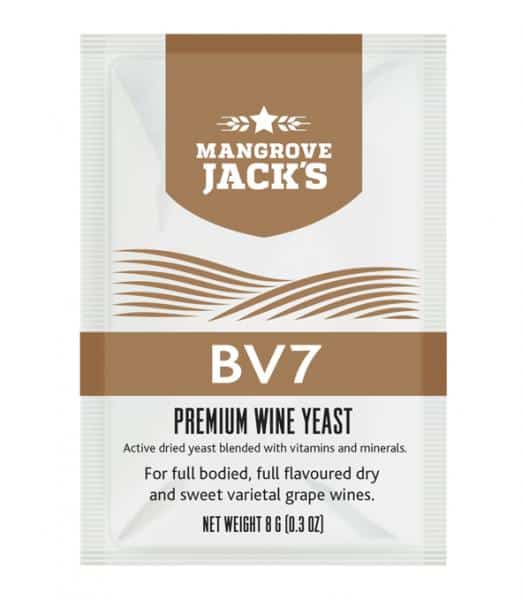
Saccharomyces Cerevisiae – Ideal for full bodied, full flavoured dry and sweet white wines.
BV7 will both preserve and enhance the grape variety and terroir, promoting excellent flavour complexity, good wine structure and balance but especially full aromatic flavour. To appreciate the impact of BV7, split a chardonnay must, fermenting half with CL23 and the remainder with BV7 – you will be amazed at the impact of the yeast strain upon fruit concentration.
BV7 produces a wide range of low level beneficial congeners such as higher alcohols and esters and high glycerol promoting full body and structure to the wine and contributing significantly to mouth-feel, wine texture and palate intensity.
Avoid fermenting above 13% abv. ethanol, BV7 is not particularly ethanol tolerant. Acceptable temperature range is 15 to 30ºC (59 -86ºF) but ferment below 22ºC (72ºF) for maximum flavour development.