Free postage on all orders over £95.
Coopers Beer Kits now in stock
View our latest Special Offers
5% Discount on orders over £150.00
Youngs Bordeaux White Wine yeast 5gm1 × £1.60
Youngs Bordeaux White Wine yeast 5gm1 × £1.60 £2.99
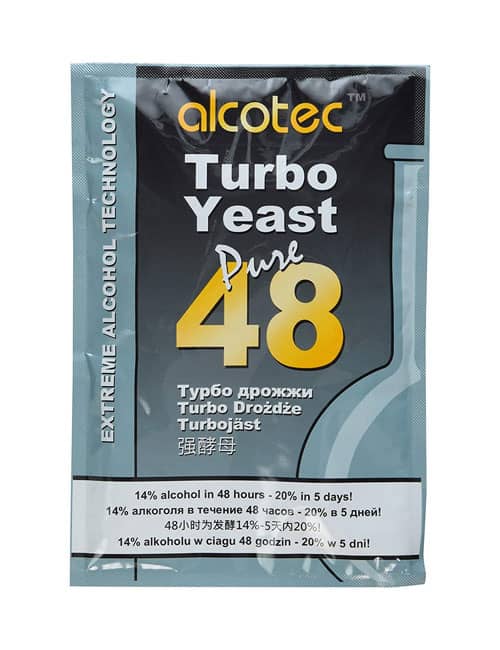
Alcotec 48 Turbo Yeast is probably the best selling turbo in the world. It is based around a “pure” yeast strain which is a temperature tolerant, high alcohol distillers strain. With the unique precisely composed nutrition, containing the nitrogen source, pH regulator, trace minerals, vitamins and an antifoaming agent, it is the perfect yeast compound for creating a high alcohol wash. It has a “dual” use, you can either use it for 20% (21% in special circumstances) alcohol in 5-6 days, or 14% in 48 hours (hence the name). The alcohol level is simply determined by the amount of sugar you add at start. Alcotec 48 includes mineral absorbents for ultra purity. Comes in 135g
Out of stock
Saccharomyces Cerevisiae – For sweet white/blush and dessert wines. Produces high levels of desirable congeners during fermentation including aromatic thiols, imparting rich fruity aromatics, full body and ‘tropical’ flavor characteristics. CY17 is also noted for high glycerol formation, further enhancing sweetness.
This is a slow fermenter compared to all other strains in the Mangrove Jack’s range, typically taking up to 21 days to ferment table wines and up to 35 days for dessert wines. CY17 prefers a constant temperature in the 22 – 26ºC (72 -78ºF) range. Dropping the temperature below 15ºC (59ºF) two thirds of the way through fermentation will arrest fermentation making CY17 suitable for producing naturally sweet wines (both potassium sorbate and metabisulphite must be used to prevent re-fermentation).
CY17 is also excellent for sweet sparkling wines, but CL23 must be employed for the bottle fermentation stage.
Avoid free SO2 levels above 50 ppm and ensure pH above 3.2, CY17 is a delicate strain that must be treated with some respect. Pay particular attention to sterile winemaking conditions and a warm start to fermentation otherwise risk of bacterial contamination is increased. CY17 will happily ferment up to 15% abv. ethanol if such conditions are employed
ide range of applications and can also be used when making fruit wines.
Technical Info
Alcohol tolerance: 18% v/v
SO2 tolerance: High
Foaming: Medium
Low production of urea
Low production of fusel oils
Viability: >1.2x 10 CFU/g
Rehydration
During yeast manufacture, special processs are employed to promote very high leveles of the natural compound – Trehalose within the yeast.
Trehalose is a natural sugar produced within the yeast cells to protect itself during prolonged storage and stress conditions.
The very high levels of trehalose acheieved also remove the need for re-hydration before adding to must or wort – there is now no advantage in doing this even for high alcohol wines.
Young’s Re-start Wine Yeast is the perfect strain for completing fermentations that are sluggish or have completely stopped. This yeast has the capabilities to kick start and dominate the fermentation, fermenting to dryness up to a possible 18% ABV. This innovative, fermentation-friendly yeast will start work quickly and produce low foam overcoming difficult fermentation conditions and delivering a consistently clean and fresh tasting wine. This strong, forceful strain is suitable for use with any red, white or rose wine it is easily handled and confers very neutral flavour and aroma characteristics. Due to it’s rapid re-activation properties it will avoid negative wine influencers such as excessive SO production, colour oxidation and flavour loss commonly associated with sluggish fermentations.
Technical Information
Gluten Free
Alcohol tolerance: 18% v/v
SO tolerance: High
Foaming: Low
Low production of fusel oils
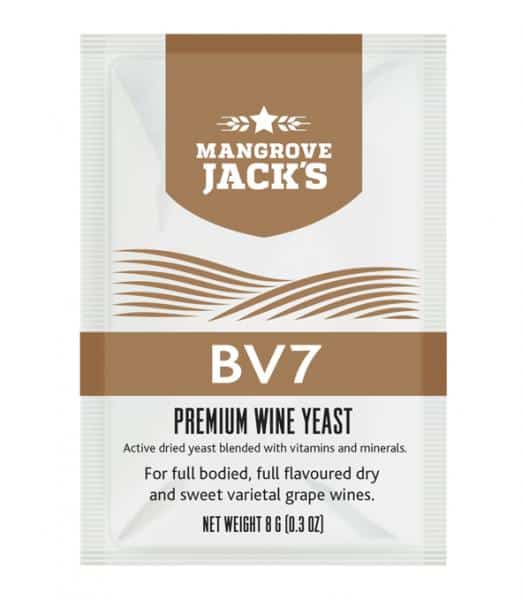
Saccharomyces Cerevisiae – Ideal for full bodied, full flavoured dry and sweet white wines.
BV7 will both preserve and enhance the grape variety and terroir, promoting excellent flavour complexity, good wine structure and balance but especially full aromatic flavour. To appreciate the impact of BV7, split a chardonnay must, fermenting half with CL23 and the remainder with BV7 – you will be amazed at the impact of the yeast strain upon fruit concentration.
BV7 produces a wide range of low level beneficial congeners such as higher alcohols and esters and high glycerol promoting full body and structure to the wine and contributing significantly to mouth-feel, wine texture and palate intensity.
Avoid fermenting above 13% abv. ethanol, BV7 is not particularly ethanol tolerant. Acceptable temperature range is 15 to 30ºC (59 -86ºF) but ferment below 22ºC (72ºF) for maximum flavour development.