Free postage on all orders over £95.
Coopers Beer Kits now in stock
View our latest Special Offers
5% Discount on orders over £150.00
£2.50 £2.00
2 in stock
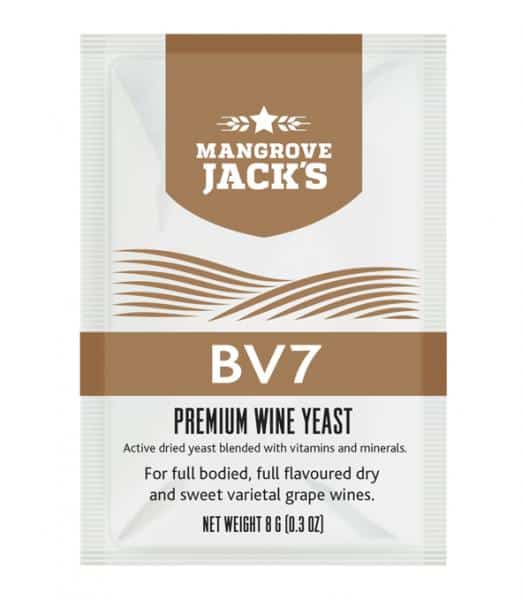
Saccharomyces Cerevisiae – Ideal for full bodied, full flavoured dry and sweet white wines.
BV7 will both preserve and enhance the grape variety and terroir, promoting excellent flavour complexity, good wine structure and balance but especially full aromatic flavour. To appreciate the impact of BV7, split a chardonnay must, fermenting half with CL23 and the remainder with BV7 – you will be amazed at the impact of the yeast strain upon fruit concentration.
BV7 produces a wide range of low level beneficial congeners such as higher alcohols and esters and high glycerol promoting full body and structure to the wine and contributing significantly to mouth-feel, wine texture and palate intensity.
Avoid fermenting above 13% abv. ethanol, BV7 is not particularly ethanol tolerant. Acceptable temperature range is 15 to 30ºC (59 -86ºF) but ferment below 22ºC (72ºF) for maximum flavour development.

Saccharomyces Cerevisiae – Ideally suited for rich, full bodied red wines with exceptional flavour complexity.
Noted for exceptional depth and flavour complexity, R56 exhibits complex aromatics during fermentation conferring an old world quality which one might only expect from natural flora multiple strain fermentations.
Unusually for complex aromatic strains, R56 still respects the varietal character of the fruit and confers good structure and balance. R56 is also a high glycerol producing strain.
R56 is a medium rate fermenter with optimal temperature between 22 to 30ºC (72 -86ºF) which will ferment to 13.5% abv. ethanol.
Diammonium Phosphate, powder for use in winemaking. This is the basic nitrogen source in nearly all wine yeast nutrients. It can be used by itself or to augment some of the more expensive complete nutrients. At certain stages of fermentation it will help inhibit formation of reduced sulfur compounds.
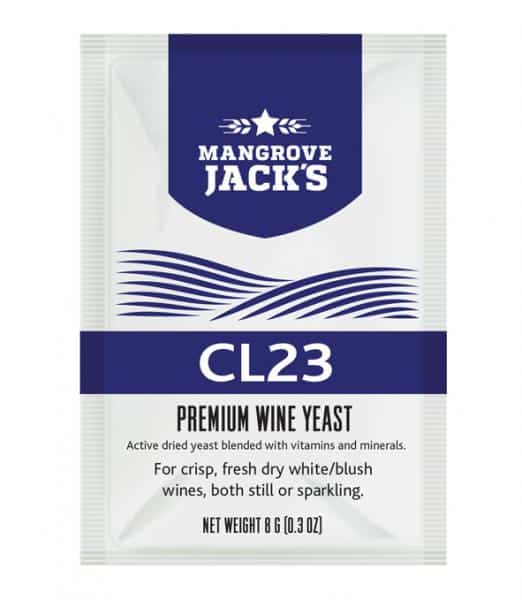
Ideal for crisp, fresh dry white/blush and all sparkling wines. Also the best strain for high alcohol tolerance. CL23 produces very low levels of fusel oils and other congener compounds during fermentation and so does not contribute much to wine flavour or aroma and can therefore be considered to be a particularly neutral / clean fermenter.
However CL23 does contribute significantly to the wines structure and ferments out sugars completely allowing for the driest of wines to be made. CL23 is noted for its robustness, being able to ferment to 18% ABV. Ethanol, tolerate high free SO2 and high levels of other stress factors such as organic acids, incorrect temperature and pH making CL23 the strain of choice for high alcohol wines or where uncertain recipes are employed and fermentation reliability is a key factor or where low temperature fermentation down to 80ºC (46ºF) is required.